Telemedicine
app development.

HIPAA-compliant video, scheduling, e-prescription, and EHR sync — shipped on iOS, Android, and web by engineers who have done this before.

Brief us on your app See it shipped
What we build

We build telemedicine apps end-to-end — patient onboarding, scheduling, encrypted video, e-prescription, payment, and synchronisation with the EHR you actually use in clinic. First production release in 12–16 weeks; HIPAA architecture from day one; ONC certification workstreams supported on request.

Problem · approach · outcome.

How we run a telehealth build
01 · Problem

Generic video tools don't survive a clinical workflow.

Off-the-shelf video is fine for a meeting. It's not fine for an encounter that has to bill, prescribe, document into the chart, and survive an audit. Clinical-grade telehealth requires real architecture.

  • Patient identity tied to MRN, not email.
  • Encounter notes that flow into the EHR.
  • e-Prescription with EPCS support.
  • Audit logs admissible in compliance review.
02 · Approach

HIPAA-first architecture, then features.

We start with the data model and the threat model. BAA-covered services only, encryption at rest and in flight, least-privilege access, and a documented incident-response plan — before the first screen is wireframed.

  • AWS HIPAA-eligible services as the spine.
  • FHIR R4 contracts for EHR sync.
  • React Native for cross-platform parity.
  • Twilio / Daily / Agora for video — your call.
03 · Outcome

A telehealth product that scales with the practice.

Production release in 12–16 weeks; documented for HIPAA audit; integrated with the EHR before launch; tested with real clinicians; and handed to operations under a managed-services agreement if you want one.

  • iOS · Android · Web on one codebase.
  • EHR-synced encounters from day one.
  • App Store / Play Store submission included.
  • Managed-services handoff, optional.

Telemedicine app features we ship.

9 standard modules · extensible
F‑01

Patient onboarding & identity

Government ID verification, insurance card capture, MRN linkage, and consent intake — HIPAA-aligned from the first tap.

F‑02

Appointment scheduling

Provider calendars, availability rules, waitlists, and cancellation windows synced to the EHR scheduling system.

F‑03

Encrypted video consultation

HIPAA-safe video over Twilio / Daily / Agora — adaptive bitrate, low-bandwidth fallback, screen sharing, recording (with consent).

F‑04

e-Prescription & EPCS

e-Prescribing through Surescripts integrations, EPCS for controlled substances, formulary lookup, and pharmacy delivery.

F‑05

EHR integration

Bi-directional FHIR R4 sync to Epic, Cerner / Oracle Health, Athena, Allscripts, eClinicalWorks — encounter notes write back to the chart.

F‑06

Billing & payments

CPT / ICD-10 capture, insurance eligibility, copay collection via Stripe Health, claim file generation for the practice management system.

F‑07

Messaging & care plans

HIPAA-compliant secure messaging, asynchronous visits, care plan tasks, and adherence nudges across the patient timeline.

F‑08

Remote monitoring

BLE device pairing (BP, SpO2, glucose), telemetry ingest, threshold alerting, and care-team dashboards. CPT 99453/99454 ready.

F‑09

Audit, reporting, analytics

HIPAA audit logs, ONC-aligned reporting, no-show analytics, provider productivity, and clinical outcome dashboards.

Tech stack.

Production-tested across telehealth builds
Mobile
React NativeSwiftKotlinFlutter
Frontend web
ReactNext.jsTypeScriptTailwind
Backend
Node.js.NET 8PythonFastAPIGraphQL
Video & comms
Twilio Programmable VideoDaily.coAgoraVonage
Cloud (HIPAA)
AWS HIPAAAzureGCPKubernetes
Interop
FHIR R4HL7 v2RedoxMirth Connect
e-Prescription
SurescriptsDrFirstEPCS
Payments
Stripe HealthSquareBraintree

Proof — a telehealth build we shipped.

Case · 2024
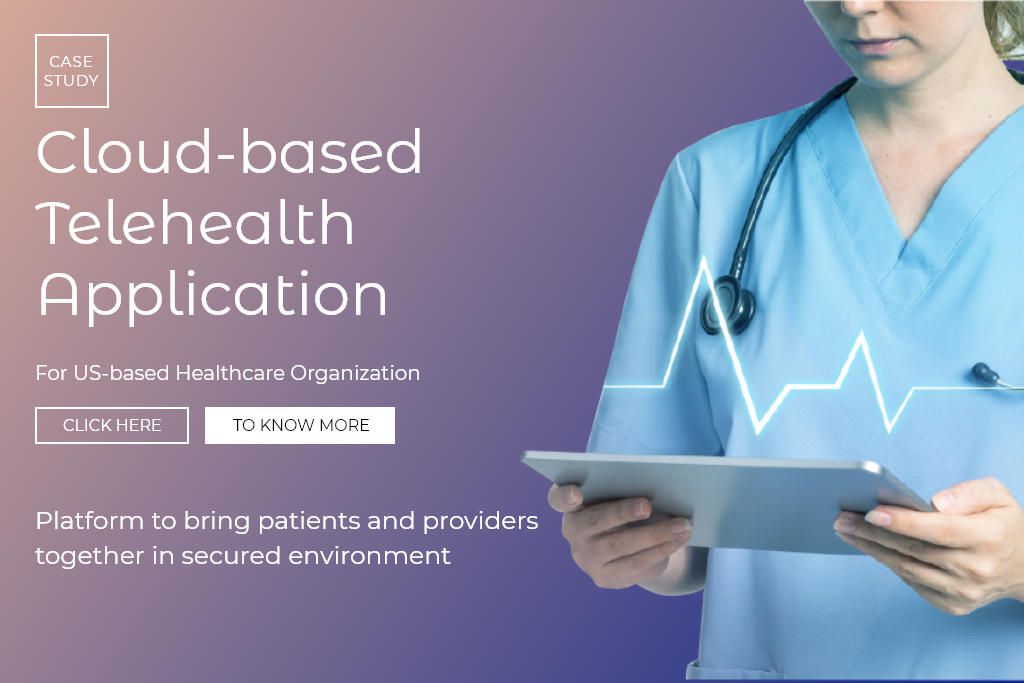
Cloud-based-Telehealth-Application
Case · primary care telehealth

White-label telehealth platform for a multi-state primary care group.

Three-state primary care group needed a HIPAA-compliant telehealth product on their own brand — iOS, Android, web — synced to Athena, e-Prescription via Surescripts, and ready for 11,000 patients on launch day.

Production release in 14 weeks, App Store approved in week 16, and on-call clinical operations onboarded in week 18. Now serving 42,000 patients across 11 clinics.

14wks
To production
42k
Active patients
4.8/5
App Store rating
Read the case study

Tell us about your
telehealth roadmap.

Healthcare practice · 14-week MVP
Get a fixed-scope quote

Telemedicine FAQs.

Q-01How long does telemedicine app development take?
For a HIPAA-compliant telehealth product covering video, scheduling, e-prescription, and EHR sync, expect a first production release in 12–16 weeks. App Store / Play Store approval adds 1–2 weeks.
Q-02Is your telemedicine app HIPAA compliant?
Yes. We architect against the HIPAA Security Rule — encryption at rest and in flight, BAA-covered cloud services only, RBAC, audit logs, and a documented incident response plan. We also support HITRUST and SOC 2 Type II workstreams.
Q-03Can it integrate with Epic, Cerner, or Athena?
Yes. We ship bi-directional FHIR R4 integration with Epic, Cerner / Oracle Health, Athena, Allscripts, and eClinicalWorks. We also use Redox and Mirth Connect when the integration map calls for it. See our healthcare IT integration services.
Q-04Do you handle e-Prescription including controlled substances (EPCS)?
Yes — through Surescripts and DrFirst. EPCS-certified workflows for controlled substances, formulary lookup, drug-interaction checks, and pharmacy delivery.
Q-05Can the telehealth app run remote patient monitoring?
Yes. We pair the telehealth app with our remote patient monitoring stack — BLE device pairing, telemetry ingest, threshold alerting, and CPT 99453 / 99454 reimbursement workflows.
Q-06How much does telemedicine app development cost?
An MVP HIPAA-compliant telehealth product typically lands in the USD 80–180k range for a 12–16 week build. Full multi-state platforms with EHR sync, EPCS, RPM, and white-label deployment land USD 200–450k. We provide a fixed-scope quote after a 1-week discovery.

Related across the cluster.